About the GEMENE-ST Database
The fall of Constantinople in 1453 was a crucial turning point in the economic history of the Mediterranean regions. The closing of eastern markets led European merchants and bankers to direct resources away from the Eastern Mediterranean and Black Sea regions and redirect them towards the Iberian Peninsula, the Maghreb, and the Atlantic World. This shift in European financial capital was most prominently reflected in the actions of Genoese merchant-bankers who settled across the Iberian Peninsula and the Atlantic archipelagos off the west coast of Africa in the second half of the fifteenth century. Their central role in the movement of capital, goods, and enslaved people through this rapidly expanding commercial zone represented a key component of a new emerging global economic system centered on the Atlantic Ocean.
Genoese merchants were the primary figures in the human trafficking of captives from the Black Sea and Eastern Mediterranean during the fourteenth and fifteenth centuries and they were able to transfer this earlier expertise to become key players in the early Atlantic slave trade. The port of Genoa, which had long served as a node of redistribution for enslaved persons from the East, continued to serve this role for increasing numbers of captives brought to the city from Genoese merchants working in Sicily and North Africa, two regions that became crucial nodes in the early African slave trade.
The Atlantic archipelagos of Madeira, the Canary Islands, and Cape Verde would concurrently become integral to Genoese commercial strategy in the Western Mediterranean and the Atlantic. Madeira and the Canaries emerged as major centers of sugar production, while Cape Verde developed into an early hub of Atlantic slavery, and these regions became crucial in connecting the economic networks of sub-Saharan Africa, the Maghreb, and the Americas.
Information about Genoese commercial activity in the Western Mediterranean and the Atlantic during the late fifteenth and early sixteenth centuries survives thanks to notarial records. These are especially valuable sources of information, since countless transactions recorded in private account books are now lost and notarial contracts—especially those housed in the notarial fonds in the State Archives of Genoa—provide the only remaining detailed view of business practices, partnerships, and the movement of enslaved people.
This project primarily focuses on documents from the Genoese notarial archives, while also incorporating materials from archives in Seville and Sicily. The database records and presents selected commercial transactions conducted by Genoese merchants from 1450 to 1530, with a specific focus on contracts related to the slave trade between the Mediterranean and the Atlantic regions, providing an accurate and accessible source of previously inaccessible historical information.
Data Sources
Genoa's State Archive
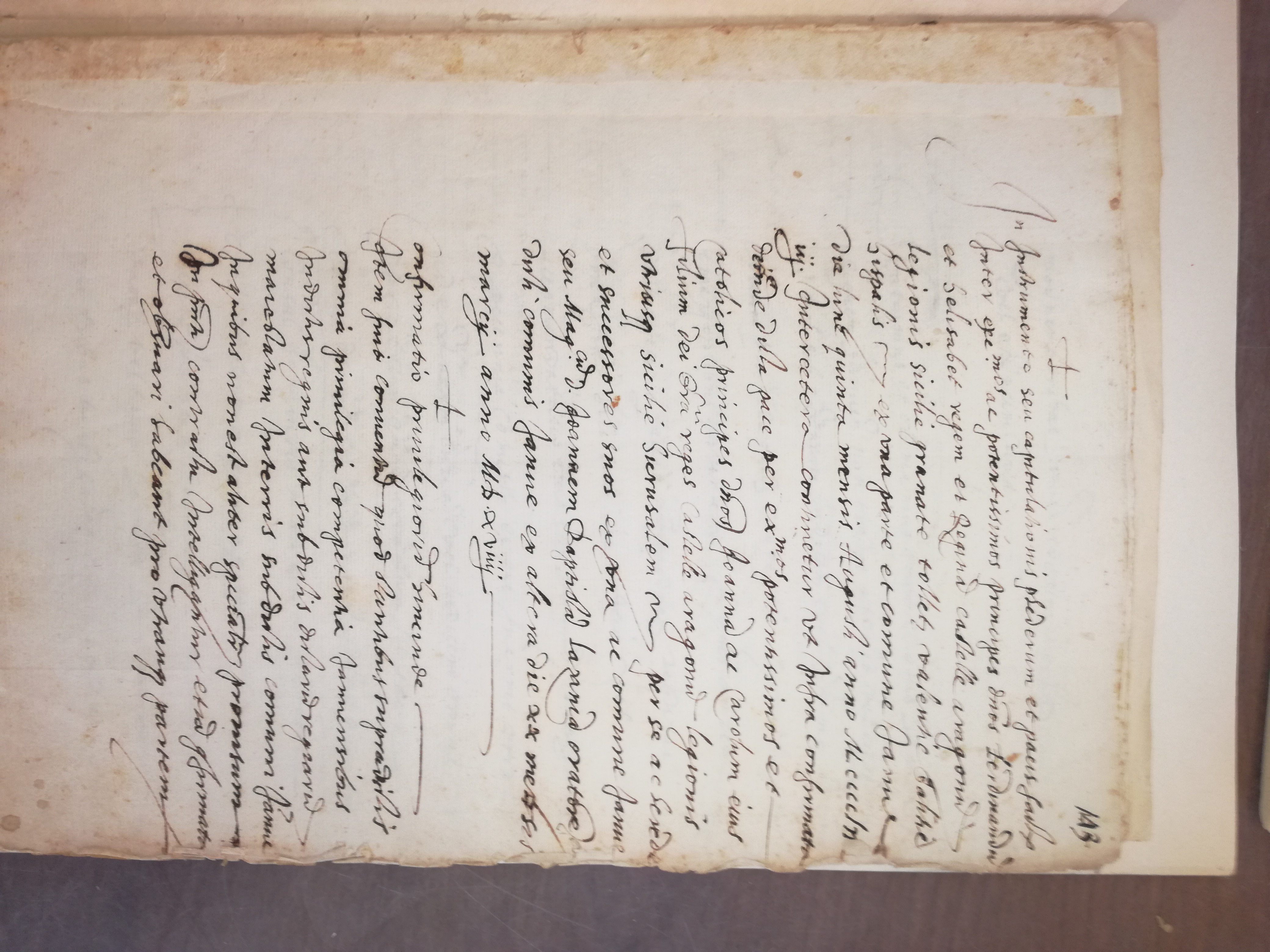
Historical documents from the State Archive of Genoa providing crucial insights into Genoese merchant activities and their connections across the Mediterranean and Atlantic regions during the early modern period.
Seville's Provincial Historic Archive
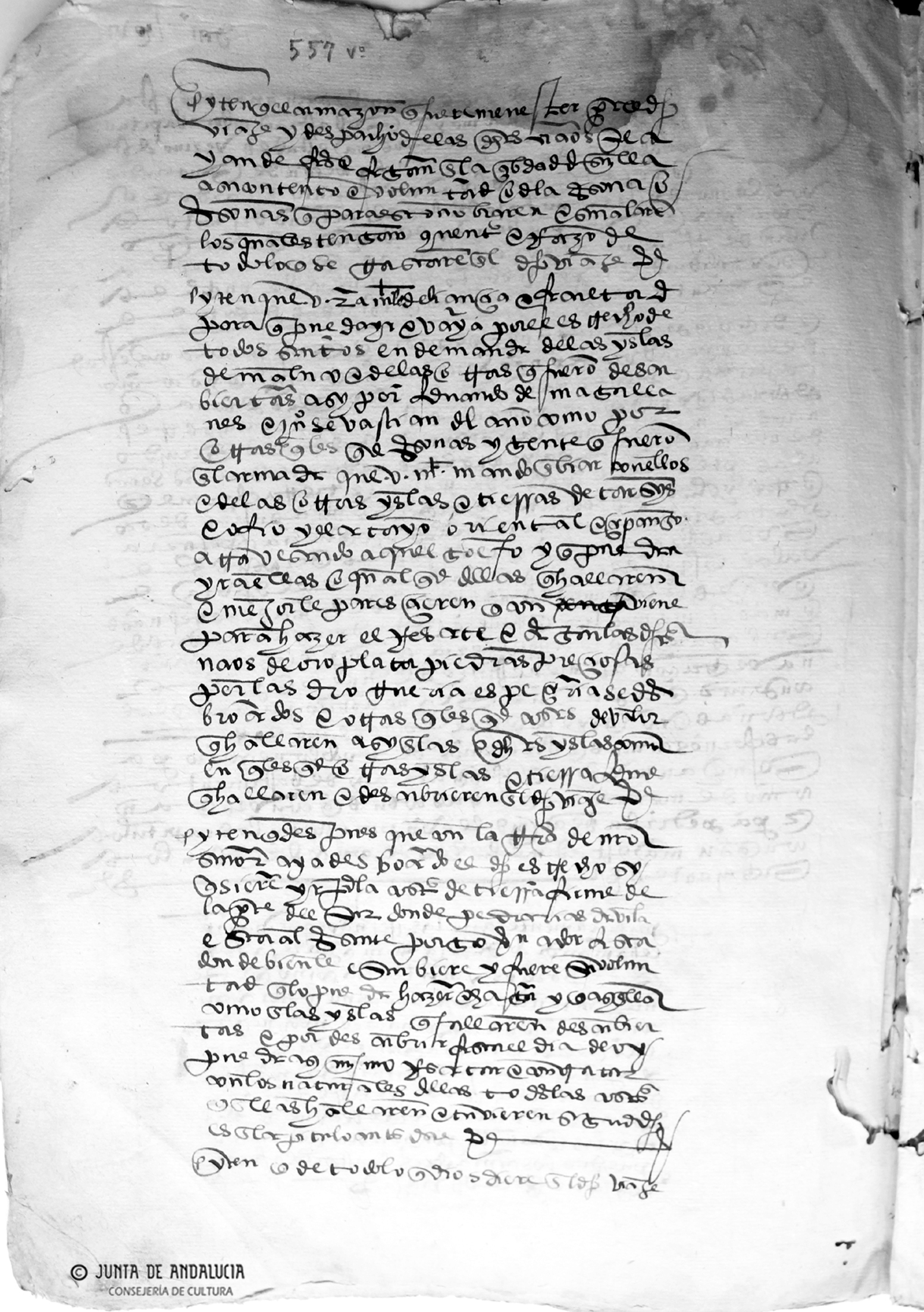
Documents from Seville's archive revealing the Atlantic connections of Genoese merchant networks and their crucial role in early Atlantic trade systems and colonial expansion.
Expandable Framework
Although at its inception the database holds only notarial deeds, the structure was designed to seamlessly hold and manage any type of historical source — letters, royal edicts, inventories, account books, religious documents, etc.
Database Structure

Fundamental Principles
1. Bipartite Operations
All social, commercial, and financial operations are processed as bipartite operations with clear givers/sellers and receivers/buyers as active actors.
2. Legal vs. Factual
We distinguish between what was legal and what was factual, between the material source and the recorded actions within it.
The database is designed to record the primary source as the anchor to the past, listing the place of creation, the date of creation, the notary or scribe, the reported total values, all the listed actors without an assigned role, and a brief description.
A separate space records each individual operation, which can be traced back to a factual and material document, allowing for comprehensive analysis of historical trade networks.
Contributing to the Database
At the moment the site is not open to unrestricted contribution from all users.
If you wish to collaborate or contribute to the project, please contact Professor Carlo Taviani.
Contact Information
Dr. Carlo Taviani
Università degli Studi di Teramo - Associate Professor
ctaviani@unite.it